Computer Vision & Robotics Laboratory, Hunter College
of CUNY

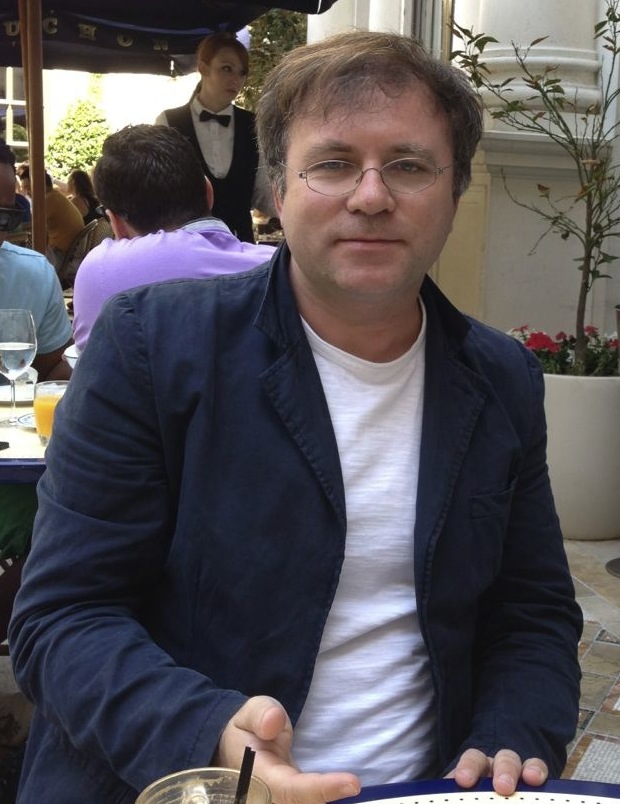
Current PhD Students
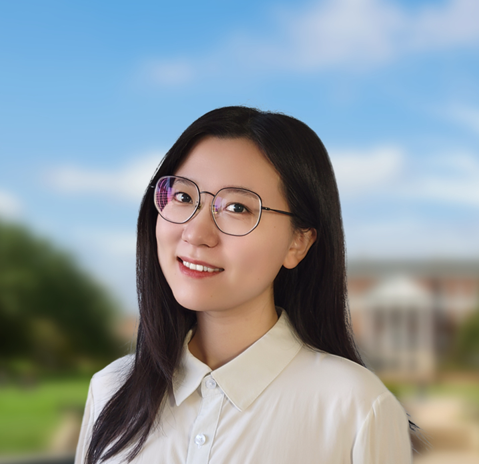 Zhujun
Li, Ph.D.
candidate Computer
Science Department, The Graduate Center
of CUNY.
Zhujun
Li, Ph.D.
candidate Computer
Science Department, The Graduate Center
of CUNY.
Current MA Students
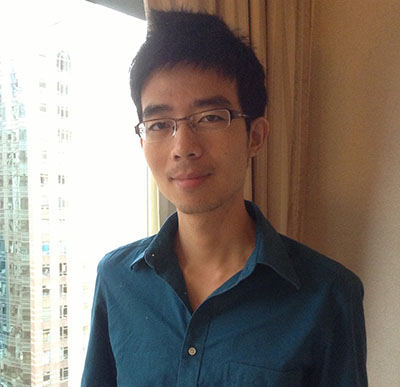 Dr.
Jimmy (Xiaoke) Shen, Jimmy was partially supported
by a Google gift during his PhD studies. Thesis can be
found here.
Dr.
Jimmy (Xiaoke) Shen, Jimmy was partially supported
by a Google gift during his PhD studies. Thesis can be
found here.
 Dr. Allan Zelener,
[now at Zoox, California]. Allan was
partially supported by NSF grants and Google gift during
his PhD studies. Thesis can
be found here.
Dr. Allan Zelener,
[now at Zoox, California]. Allan was
partially supported by NSF grants and Google gift during
his PhD studies. Thesis can
be found here.
 Dr.
Juan Liu [now at Google, New York
City]. Juan was partially supported by
an NSF grant during her PhD studies. Thesis
can be found here.
Dr.
Juan Liu [now at Google, New York
City]. Juan was partially supported by
an NSF grant during her PhD studies. Thesis
can be found here.
 Dr. Sam Friedman
[now at Broad
Institute, Cambridge, MA (before at Apple,
Cupertino, California)]. Sam was supported by an NSF
grant during his PhD studies. Sam's thesis can be found
here.
Dr. Sam Friedman
[now at Broad
Institute, Cambridge, MA (before at Apple,
Cupertino, California)]. Sam was supported by an NSF
grant during his PhD studies. Sam's thesis can be found
here.
 Dr. Lingyun Liu
[now at Google, Mountain View, California]. Lingyun was
supported by an NSF grant during his PhD studies.
Dr. Lingyun Liu
[now at Google, Mountain View, California]. Lingyun was
supported by an NSF grant during his PhD studies.

Dr. Cecilia Chao
Chen [now at Google, New York City]. Cecilia was
supported by an NSF grant during her PhD studies.
Dr.
Adriana Wise
[now adjunct lecturer, Hunter College, New York City].
Adriana's thesis can be found here.
- Google Research Award, "Classification of urban objects in 3D
point clouds", I. Stamos (PI), 2017-
- NSF Major Research Instrumentation
(MRI), "MRI: Acquisition of mobile robots to support
indoor navigation and online 3D object detection", CNS,
Oct. 2016 - Oct. 2019, I. Stamos (PI), S. Epstein &
O. Hadjiliadis (co-PIs), $100,450 (plus $43,050 Hunter's
cost-sharing).
- Google Research Award, "Classification of vehicles in points
clouds of urban scenes", I. Stamos (PI), (O.
Hadjiliadis (co-PI), 2015-2016, $45,550.
- CUNY Collaborative Award, "Gradual Change detection for object classification in 3D Computer Vision", I. Stamos (co-PI), (O. Hadjiliadis PI), 2014-2015, $30,000.
- CUNY Central and Hunter, "Shape Completion, Recognition and Modeling from Registered 3D and 2D Datasets", I. Stamos (PI), 2014-2015, $50,000.
- PSC-CUNY Research Award Program, "Automated Classification of Urban Objects for Accurate 3D reconstruction", I. Stamos (PI), 2013-2014, $6,000.
- Presidential Grant for Faculty
Advancement (Hunter College), 2013-2014, $1,500
- NSF Robust Intelligence, "RI: Small: Modeling Cities by Integrating 3D and 2D Data'', IIS-0915971, September 2009 - August 2012 (Principal Investigator), $474,963.
- NSF MSC, "MSC: Sequential Classification and Detection via Markov Models in Point Clouds of Urban Scenes'', CCF-0916452, September 2009 - August 2012 (Principal Investigator), Olympia Hadjiliadis (co-PI), $379,998.
- NSF Major Research Instrumentation
(MRI), "MRI: Acquisition of Range-Scanning and
Rapid Prototyping Equipment for 3D Urban Modeling'',
CNS-0821384, September 2008 - August 2011 (Principal Investigator), $99,500 (NSF) + $42,856 (Hunter's co-share). - NSF Faculty Early Career
Development Award (CAREER), "CAREER: Photorealistic 3-D
Modeling of Large-Scale Scenes: Integration of 3-D Range
and 2-D Intensity Sensing in a Complete System'',
IIS-0237878, February 2003 - January 2009
(Principal Investigator), $427,047. The award includes
three Research Experience for Undergraduates (REU)
supplements (2005, 2006 and 2008).
- NSF Major Research Instrumentation (MRI), "MRI/RUI: Acquisition of Range-Scanning Equipment and of Data Servers for the Reconstruction of Large-Scale Scenes from 3D Range and 2D Color Data'', EIA-0215962, May 2002 - April 2004 (Principal Investigator), $159,307.
- Urban Modeling Project, Google Gift, 2007-2008 (with Prof. George Wolberg), $50,000.
- CUNY Collaborative Award, "Visualization Toolkit for 3D Photography'', September 2006 - August 2007 (with Prof. George Wolberg), $40,000.
- Presidential Travel Grant, Hunter
College, January 2008 ($1,700), February 2009 ($650).
- PSC-CUNY Research Award Program: a) ``Photorealistic 3-D Modeling'', 2002 - 2003 , b) ``Automated Registration'', 2005 - 2006 , c) ``3D Modeling in Urban Environments'', 2008 - 2009.
- CUNY Institute for Software Design and Development, ``Automatic Registration of 3-D Point Sets'', June 2002 - October 2002, January 2003 - June 2003 (Principal Investigator), $12,000.
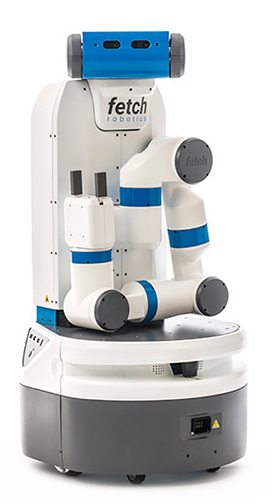
Our laboratory is equipped
with the latest generation in range sensing technology (Leica
3D laser scanning system) and robotic
platforms. The necessary funding was provided
by the National Science Foundation under Grants 0821383,
0215962 and 1625843. Indoor scanners (Matterport
and DotProduct, LLC) are part of thour laboratory as well.
High end digital color cameras are used for the acquisition of
color photographs. Linux- and
Windows-based workstations are used for processing and
visualization.
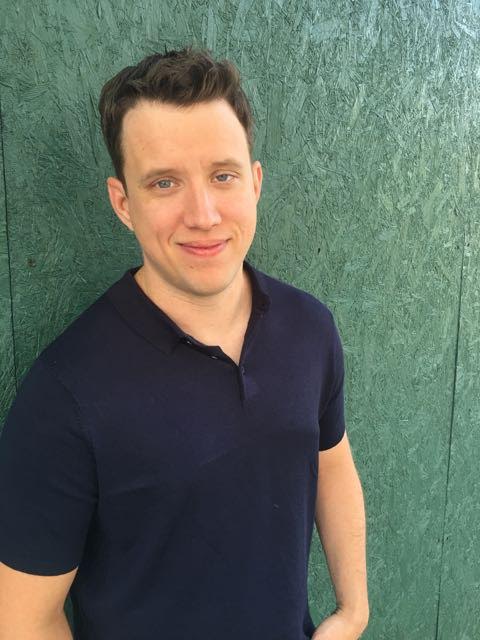 James Kluz,
Hunter College
Computer Science BA / Mathematics MA graduate. Earned an MS at
Cornell Tech.
James Kluz,
Hunter College
Computer Science BA / Mathematics MA graduate. Earned an MS at
Cornell Tech.
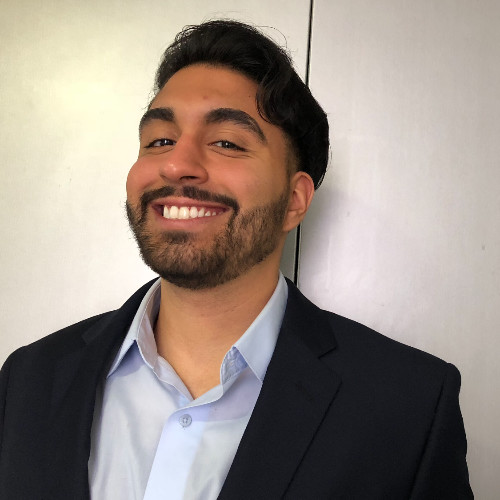 Jaime
Canizales, MA Project
on Robotic navigation and ROS.
Jaime
Canizales, MA Project
on Robotic navigation and ROS.
 Youngsu
Jung, MA student (project: human
tracking).
Youngsu
Jung, MA student (project: human
tracking).
Alumni (undergraduate, or towards
PhD)

 Dr. Thomas Flynn
(worked
in our lab as an undergraduate and as a PhD student). He
is now at Brookhaven
National Laboratory.
Dr. Thomas Flynn
(worked
in our lab as an undergraduate and as a PhD student). He
is now at Brookhaven
National Laboratory. Agis
Mesolongitis [co-advised with Olympia
Hadjiliadis]. Completed Candidacy Exam.
Worked in our lab as a PhD candidate
(supported by NSF grant). Now at Zoox, Sillicon Valley, CA.
Agis
Mesolongitis [co-advised with Olympia
Hadjiliadis]. Completed Candidacy Exam.
Worked in our lab as a PhD candidate
(supported by NSF grant). Now at Zoox, Sillicon Valley, CA.Andrey Goltsev, worked in our lab (funded by the National Science Foundation) as an undergraduate student. He is pursued MS at NYU-Poly.
Jeff Epstein worked in our lab when he was an undergraduate student. He completed his MS at Cambridge University, UK.
Yevgeniy Pavlov worked in our lab (funded by the National Science Foundation) when he was an undergraduate student. His concentration was shape similarity.
Koichiro Matsunaga, worked in our lab (funded by the National Science Foundation) when he was an undergraduate student (Summer 2006). Koichiro completed his MS at Columbia University.
Older Work
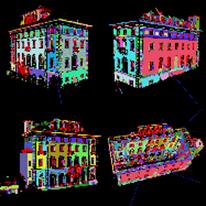 Photorealistic 3D
Modeling (PhD work at Columbia University)
Photorealistic 3D
Modeling (PhD work at Columbia University)
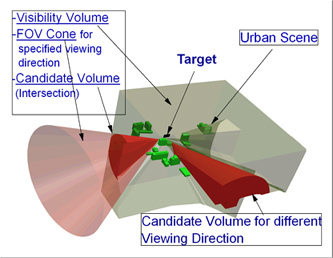 Interactive Sensor
Planning
Interactive Sensor
Planning
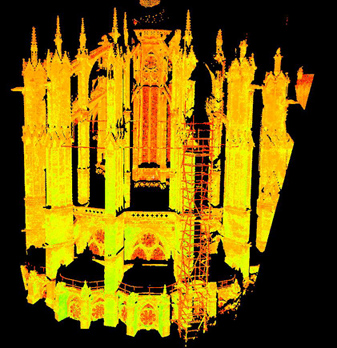 The Beauvais Project (collaboration
with Columbia University)
The Beauvais Project (collaboration
with Columbia University)